

You brush your child’s teeth, remind your teen about flossing, and still wonder if it is enough. Maybe you grew up in a home where dental visits happened only when something hurt. Maybe cost, time, fear, or plain exhaustion pushed routine care to the side. Finding a dentist in Mount Vernon can help change that pattern. That pattern is common, and it tends to repeat itself across families.
That is why Why Preventive Dentistry Protects Against Generational Health Risks matters so much. Oral health habits, untreated decay, missed cleanings, and delayed care do not stay contained to one person or one year. They can shape how children eat, sleep, learn, and think about healthcare for the rest of their lives. A good family dentist helps interrupt that cycle early, before small issues become family patterns.
Preventive dental care changes the pattern before it hardens
Generational health risks often start quietly. A parent avoids the dentist because of a bad past experience. A child picks up that fear without anyone saying a word. Tooth pain gets normalized. Sugary drinks become part of the routine. Cavities are treated as random bad luck instead of signs that something in daily life needs support.
That is where preventive dental care does its real work. Regular exams, cleanings, fluoride, sealants, and home care guidance catch problems early and lower the risk of decay and gum disease. According to the CDC’s guidance on oral health prevention, prevention reduces disease burden and helps people avoid more serious treatment later.
The effect reaches beyond the mouth. When a child has untreated tooth decay, sleep suffers, school focus drops, eating becomes uncomfortable, and behavior can change. Adults with untreated dental problems may delay meals, avoid smiling, miss work, or live with constant low grade pain. Those experiences shape family routines, stress levels, and healthcare choices.
A preventive dentistry plan also gives families something many have never had, which is predictability. You know when visits are coming. You know what the goals are. You are not waiting for a crisis to decide what to do next.
Family oral health risks often follow lines of income, access, and stress
Some families are not skipping care because they do not care. They are juggling rent, childcare, work schedules, transportation, and insurance limits. When life gets tight, a cleaning can feel easy to postpone. The problem is that postponed care often returns as pain, infection, emergency treatment, and higher cost.
The burden is not shared equally. The CDC’s work on oral health equity shows that access, income, race, disability, and geography all shape who gets preventive care and who ends up with avoidable disease. That means generational risk is not just about habits. It is also about systems that leave some families with fewer good options.
You can see how this plays out. One parent missed preventive visits growing up, needed multiple extractions as an adult, and now assumes their child will probably have “bad teeth” too. Another family uses regular checkups, gets sealants early, catches alignment issues before they worsen, and treats oral care like part of normal health. Those children absorb two very different messages about what care looks like.
The larger picture is clear in the National Institute of Dental and Craniofacial Research report, Oral Health in America. Oral disease remains common, and the impact lands hardest on people already facing other health and social strain. Prevention is not cosmetic. It is a way to reduce avoidable harm over time.
Preventive dentistry costs less than crisis care and causes less disruption
When families rely on symptom based care, they usually pay more in money, time, and stress. A missed cleaning can turn into a filling. A delayed filling can turn into a root canal or extraction. A child who only sees the dentist in pain may carry that fear into adulthood, and the cycle keeps going.
| Approach | Short Term Experience | Long Term Family Impact |
|---|---|---|
| Routine preventive visits | Scheduled cleanings, exams, fluoride, home care coaching | Lower risk of decay, earlier treatment, less fear, steadier costs |
| Wait until pain starts | Emergency calls, urgent treatment, missed school or work | Higher costs, more complex procedures, stronger dental anxiety |
| Prevention for children only | Kids get care, adults postpone their own treatment | Children may still learn that adult care is optional or crisis based |
| Whole family prevention plan | Shared appointments, consistent habits, fewer surprises | Healthier routines that children are more likely to repeat as adults |
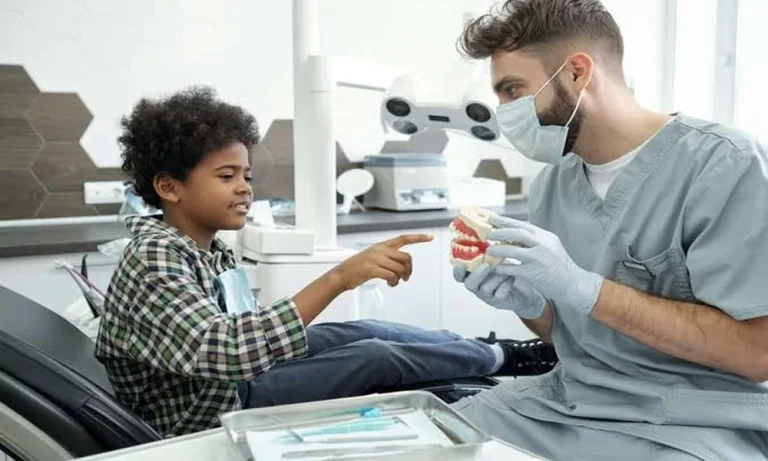
This is where a family focused dental office makes a difference. When parents and children receive care in the same setting, it is easier to build consistent habits. Kids see adults keeping appointments. Adults hear the same practical advice their children hear. Oral health stops feeling like a separate task and starts becoming part of family life.
Small actions now reduce generational dental risk later
Schedule care before anyone is in pain. Do not wait for a complaint, swelling, or a broken tooth. Preventive visits work best when they happen on a routine schedule. If fear has kept your family away, say that out loud when you book. A good office will meet you there without judgment.
Make home care visible and shared. Children copy what they see. Brush and floss where they can watch. Replace the idea of “bad teeth run in the family” with “we take care of our teeth in this house.” That shift sounds small, but it changes identity, not just behavior.
Ask for a risk based prevention plan. Not every family has the same needs. Some children need sealants early. Some adults need closer gum monitoring. Some households need simple nutrition changes that reduce cavity risk. Ask your dentist to explain what matters most for your family right now, and what can wait.
Breaking the cycle starts with one steady decision
If dental problems have been passed down in your family, that does not mean they have to keep moving forward. Patterns can change. Fear can soften. Children can grow up seeing dental care as normal, manageable, and worth keeping up with.
Oral disease prevention is one of the clearest ways to protect your family’s health across time, not just today. If you have been putting off care, now is a good time to schedule a visit with a family dentist and start building a healthier pattern that lasts.